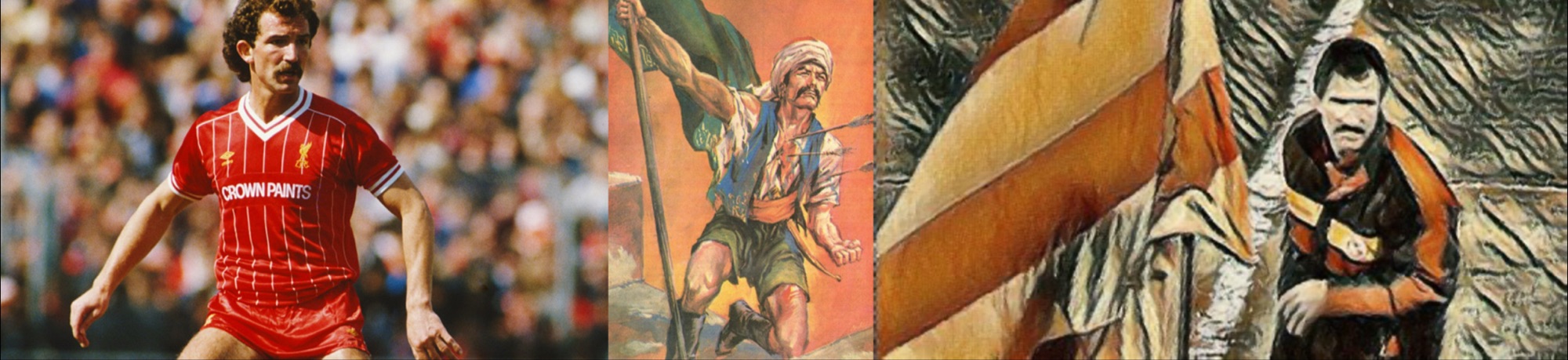
from the Historical Reincarnations Desk
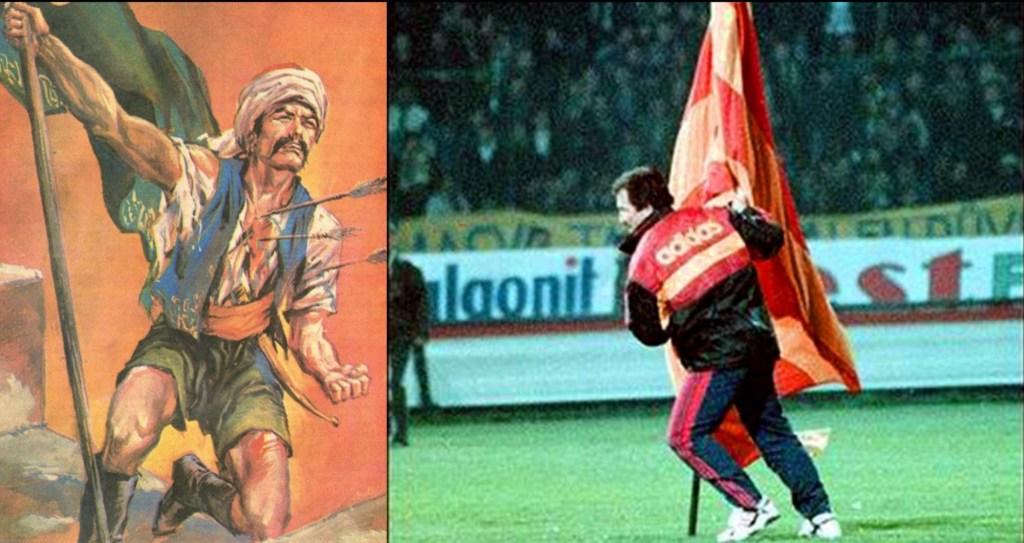
ISTANBUL, 1995. The roar was not just for a man, but for a name. “Souness! Souness! Souness!” To the Turkish ear, it was not a Scottish surname they chanted, but an incantation: “Sönmez! Sönmez! Sönmez!”- “He does not die!” to the thousands in that stadium, they were not merely celebrating a football manager. They were resurrecting a 542 year old legend through a name whose meaning was encoded in the deepest strata of language itself, a name that may have hidden a fallen dynasty’s greatest secret.
This is the story of how the Hebrew root for “miracle” and the Turkish word for “unquenchable” conspired to bind an Ottoman hero and a Scottish icon across time.
THE HEBREW ROOT OF THE MIRACLE
To find the source of the connection, one must journey back to the ancient Hebrew of the Old Testament, to the root N-S (נ-ס) and the word נֵס (nes). Its primary meaning is a banner, a standard lifted high on a pole as a signal for an army to rally to. This visible sign became the key to its spiritual evolution. Just as the physical standard was a rallying point that could change the fate of battle, so too could a divine act serve as a rallying point for faith. Thus, by powerful conceptual extension, any event that served as a profound, visible sign from God, a miracle, came to be called a nes. The pole was the object; the miracle was its world altering consequence, a concept exemplified in the story from Numbers 21:8-9, where a bronze serpent raised on a pole (a nes ) became a divinely ordained instrument of salvation for all who looked upon it.
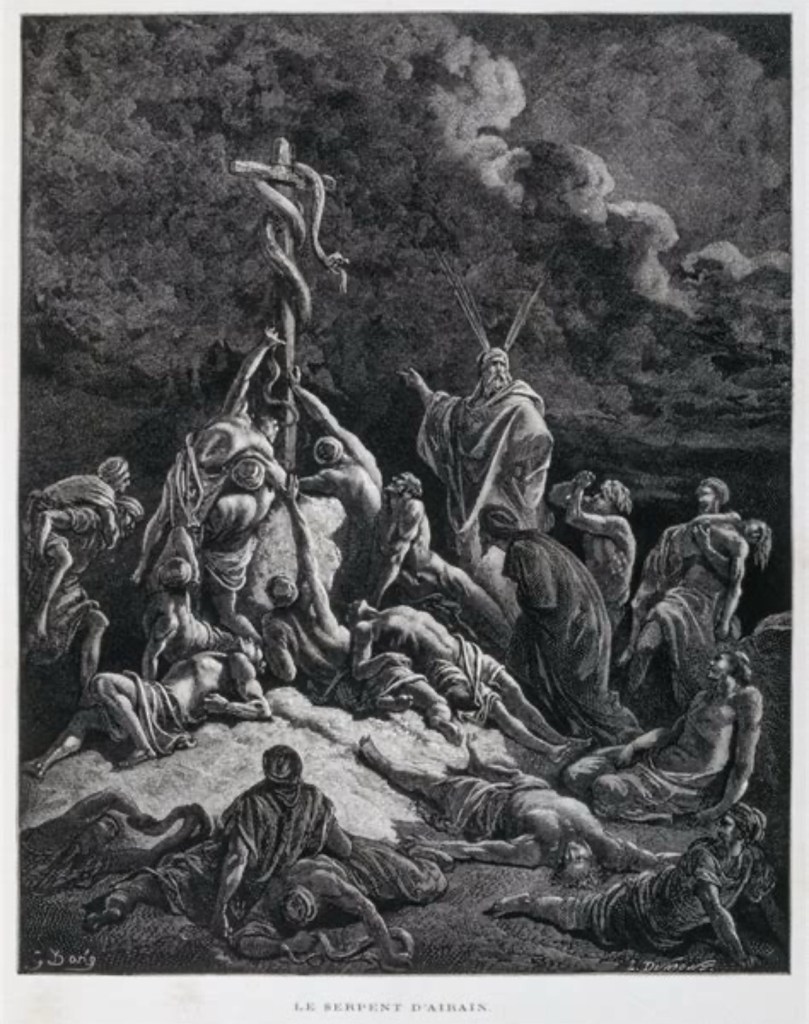
Wood Engraving Of The Brazen Serpent – Moses holding the Serpent so the Israelites who saw it were protected from dying from the fiery serpents Numbers 21:9 by Gustave Dore from Antique 19th Century Holy Bible
THE STANDARD BEARER AND THE SECRET HOUSE
This brings us to the legend of Ulubatlı Hasan, the Ottoman warrior who scaled the walls of Constantinople in 1453. His act was the literal embodiment of the nes: he was the standard bearer, raising the Sultan’s flag high upon the walls, a sight that signaled the final, miraculous victory.

Siege of Constantinople (1453). Panorama 1453 History Museum, Istanbul, 2009.
But what if his story contained a deeper secret? This is where we venture into breathtakingly conjectural territory. After the fall of the Byzantine Empire, descendants of the defeated Komnenos dynasty, the last imperial house, faced a stark choice to assimilate or perish. The Komnenoi were masters of survival. Facing extinction, Emperor Alexios III Komnenos made a fateful move: he married his daughter, Theodora Komnene, to Süleyman Bey, son of the powerful Turkish Emir Tacettin of Sinope. This was no minor alliance but a strategic union with a formidable Muslim dynasty. While their descendants were thought to fade into history, this verified bloodline provides the only logical bridge for Komnenos DNA to enter the Ottoman world. It is from this very union that a descendant, generations later, could have risen not as a Byzantine prince, but as an Ottoman hero, his imperial blood hidden behind a new identity. So let’s imagine the identity of this man. He would need a cover name, a triple layered cipher…
He may adopt Hasan, a common Muslim name. He would earn or claim the title Bey, a Turkic term for a chieftain or lord of a household. And finally, he may take the surname Sönmez, meaning “inextinguishable” or “unquenchable.”
Thus we have, Hasan Bey Sönmez, not merely a name but a hidden, defiant declaration: ‘The Lord of the House whose fire is unquenchable’. A poetic vow that the imperial spirit of the Komnenoi had not been extinguished, merely hidden in plain sight. This man, the theory suggests, became the historical figure we know as Ulubatlı Hasan, the standard bearer whose blood may have been far more royal than anyone ever knew.
THE EXILED CHRONICLER: ANNA KOMNENE’S SECRET VOW
The Komnenos flame did not only flee east into Anatolia, it also fled west, into exile. The most famous chronicler of the dynasty was Anna Komnene, the brilliant, purple born daughter of Emperor Alexios I. Denied the throne, she was imprisoned in a monastery for three decades following a failed coup against her brother . There, she poured her thwarted ambition and immense intellect into writing the Alexiad, the definitive history of her father’s reign. It was an act of preservation, ensuring the Komnenos legacy would never be erased by their enemies, or by time itself. Could the defiant cry of Sönmez (“Unextinguished“) have originated not with a warrior in Anatolia, but with a historian in a Constantinopolitan prison? Was it the vow of a princess who refused to let her family’s story die?

Anna Komnene
HE ACOUSTIC ALCHEMY OF A NAME
Centuries later, history needed a new vessel for the archetype. It found one in Graeme Souness, a man whose surname, anglicized from the Gaelic MacShuibhne, arrived in Turkey devoid of its original meaning. Yet, through sheer acoustic alchemy, its pronunciation performed a miracle. To the Turkish ear, “Souness” was identical to “Sönmez.” When the Galatasaray crowd chanted his name, they were chanting the very essence of the hidden vow. They were chanting “Unquenchable!” But the connection plunges even deeper. The name Souness can be heard as a portmanteau, a perfect fusion of the two ancient concepts that define the legend: the unquenchable spirit (Sönmez) and the miracle standard (Nes). Their chant was an unconscious invocation of the complete archetype: ‘The Unquenchable Standard’,

Graeme Souness captaining Scotland
THE UNCANNY RESEMBLANCE
The final, possible piece of evidence lies not in text, but in flesh and bone. Historical paintings of Ulubatlı Hasan, based on contemporary descriptions, reveal a man with a strong, defined jawline, intense dark eyes, a prominent nose, and wavy hair. Place this image beside a photograph of a young, dark-haired Graeme Souness from his Liverpool zenith, and the resemblance is arresting. The same determined set of the jaw, the same penetrating gaze, the same fundamental architecture of the face. It is an uncanny visual echo that transcends culture and epoch, suggesting a symbolic reincarnation so complete it manifested in likeness.

THE NAME IS THE SPELL
This is not a story of simple genealogy. It is a story of symbolic reincarnation and acoustic destiny. The theory posits that the eternal roles, the Standard Bearer (Nes), the Lord of the House (Bey), are archetypes that forever seek expression.
The name Sönmez was both a disguise and a spell, a vow that the spirit of the act would never die. In 1995, history found its perfect vessel: a man whose name, when chanted, became an incantation fusing “unquenchable” and “standard,” and whose face eerily mirrored the hero of legend. Graeme Souness didn’t need to be a literal descendant. Through the magic of language, symbol, and bloodline that may well be real, he became Hasan Sönmez. The unquenchable standard had been raised once more.
EXTRA: The Liverpool Fire in Istanbul

The miracle of Istanbul
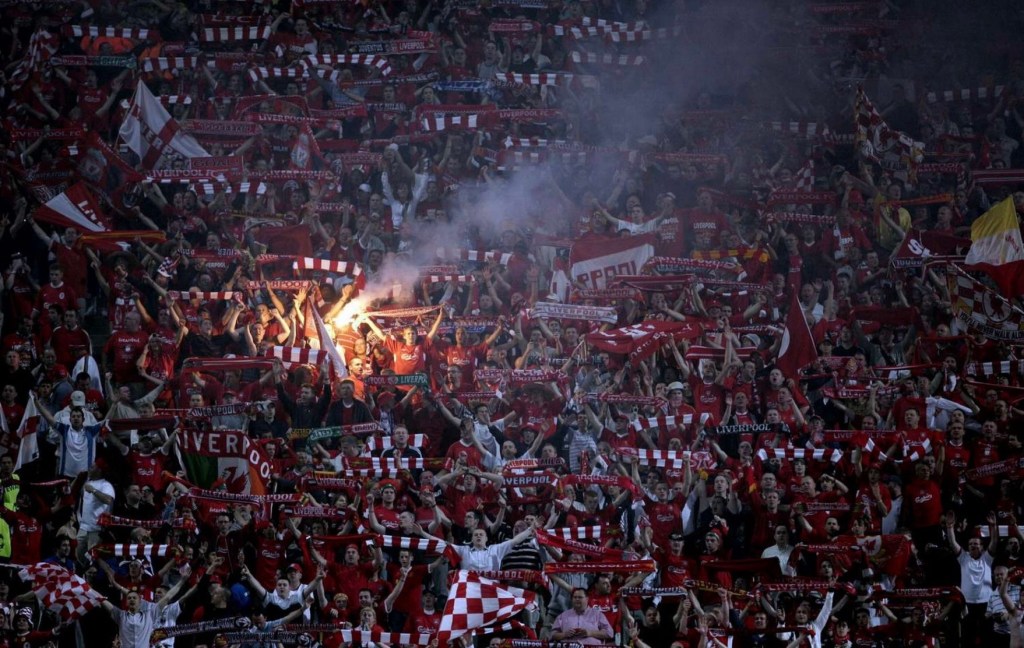
The Unquenchable Fire: Liverpool FC fans create a living sea of red in Istanbul’s Atatürk Olympic Stadium, May 25, 2005.
But the story does not end in 1995. A decade later, history would stage its grandest encore on the same ancient stage. In 2005, in the very city where Ulubatlı Hasan planted his flag, another miracle unfolded. Liverpool Football Club, the team where Graeme Souness forged his legend, staged a victory so impossible it was dubbed the “Miracle of Istanbul.” And as they did, the anthem of their unquenchable spirit echoed through the night. The song was of course “You’ll Never Walk Alone.”
“Walk on, through the wind / Walk on, through the rain / Though your dreams be tossed and blown“
Its lyrics are a perfect, uncanny echo of the Sönmez vow. It is a hymn to resilience, to a spirit that will not be extinguished by any storm. And as tens of thousands of voices sang it in that ancient city, they were not just cheering a team. They were giving voice to the very same eternal fire. The fire of a standard that would not fall. The fire of a name that would not die. The inextinguishable Komnenos flame, carried through blood and symbol, from a Byzantine princess to a Turkish hero, and onto the lips of a Scottish legend and his people. The wind and rain could not put it out. Conquest could not smother it. Centuries could not dim it.
Some fires are simply born Sönmez.
Walk on.

The Ever-burning Flames of Mount Chimaera Near Olympos, Antalya, Turkey
Leave a Reply