From the Solar Barque Desk

“To the divine all things are fair and good and just, but men suppose that some things are unjust and others just.”
Heraclitus of Ephesus, Fragment 102 (Diels-Kranz)
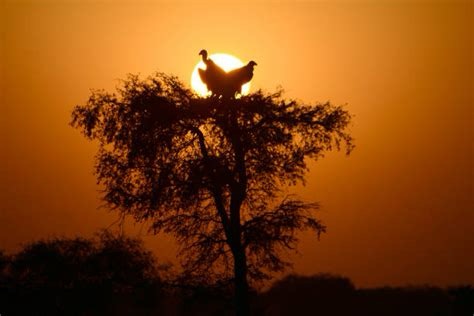
Throughout human history, creatures associated with death, poison, and decay, like vultures and scorpions, have undergone a remarkable transformation. Once feared as “unholy,” they became revered as divine protectors, guides of souls, and even cosmic symbols. This shift wasn’t random. It was often tied to periods of deep societal trauma, such as the ecological upheavals after the Younger Dryas (12,900-11,700 years ago). A period where Vultures and Scorpions would have thrived.
In this article, we’ll explore how these animals moved from being seen as threats to sacred guardians, examining their roles in myth, ritual, and even the stars.
Why Do Feared Animals Become Sacred?
At the heart of this transformation is a simple but powerful idea: what threatens us can also protect us. This process often unfolded in two stages. Early societies relied on shamanic intermediaries to navigate danger, leading to the adoption of powerful animals like vultures and scorpions as spiritual allies. Over time, their roles expanded from the practical, such as cleansing corpses or testing initiates with pain, to the cosmic, where they came to symbolize rebirth and stand as eternal guardians of the afterlife.
Ok The Vulture: From Corpse Eater to Solar Phoenix
“I am the bird of phoenix, here and now,
I die in fire and from the ashes rise
What I have been, I am; what I am, I shall be.”
Lactantius, De Ave Phoenice (3rd century CE)
The Shamanic Vulture: Cleaner of the Dead
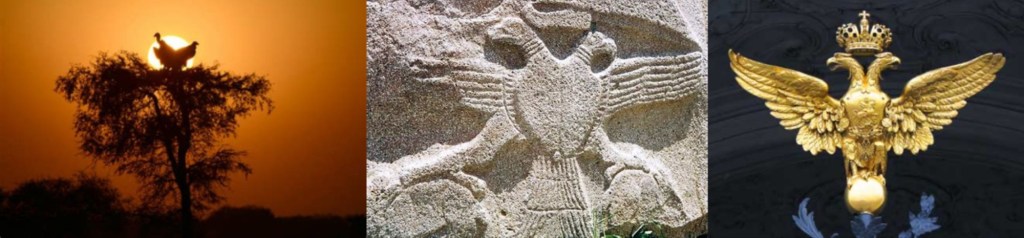
After the Younger Dryas, mass extinctions left landscapes littered with carcasses. Vultures thrived and humans took notice. In cultures from Tibet to ancient Persia, vultures were embraced as sacred undertakers in sky burial traditions, performing the essential task of carrying flesh, and by extension souls, to the afterlife. This ritual importance is hinted at in some of humanity’s oldest temples; the carved raptors on the pillars of Göbekli Tepe suggest these birds held deep ritual significance for our early ancestors.
The Divine Vulture: Goddesses and Rebirth
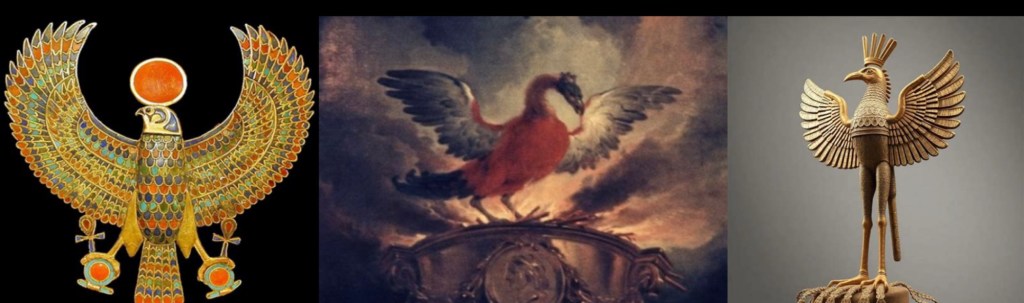
By the time of ancient Egypt, vultures had ascended to full godhood. The vulture goddess Nekhbet spread her protective wings over the pharaohs, symbolizing fierce maternal care. This evolution culminated in the Bennu bird, a heron-like deity associated with the sun and rebirth that served as the direct Egyptian precursor to the Greek phoenix. It is a profound alchemy of symbolism: the mythical phoenix, a universal symbol of fiery renewal, has its deepest roots in the humble, carrion eating vulture. Why the shift? Trauma reshapes meaning. A creature once tied to decay became a powerful symbol of life’s persistent, cyclical return.
“I am the Bennu bird, the heart of Ra… I have come forth that I may see my father Osiris, for I am one of those gods, those august ones, who discourse with him.”
The Book of the Dead (Spell 83, New Kingdom period)
The Scorpion: From Lethal Sting to Celestial Guardian
“The scorpion’s sting is deadly, yet its oil
Doth heal the wound; so venom cures itself.”
John Lyly, Euphues: The Anatomy of Wit (1578)
Venom as a Test of Power
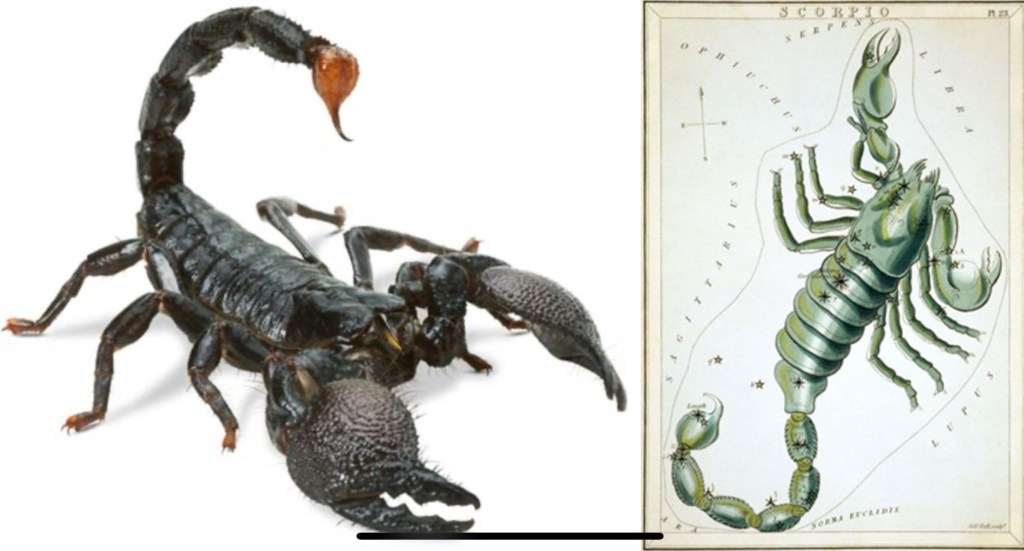
Scorpions, with their paradoxical deadly sting, were both feared and revered for their power. This respect is seen in initiation rites, such as those of the Sateré-Mawé tribe of the Amazon, who use excruciating bullet ant stings, a parallel to scorpion venom, in coming of age trials, viewing pain as a necessary path to strength and resilience. This concept of harnessing danger extended to protection, with Neolithic figurines from Jordan and Mesopotamia depicting scorpions as potent guardians against evil.
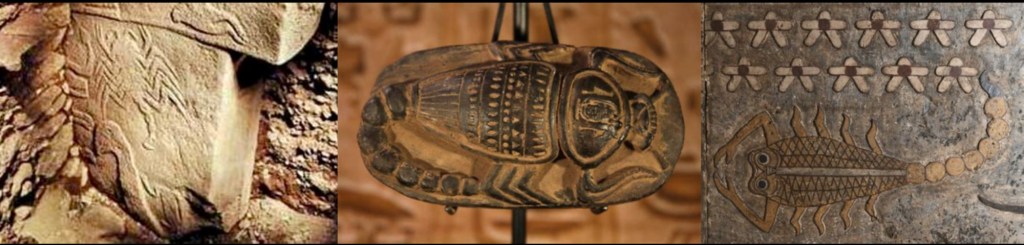
The Scorpion’s Cosmic Rise
From an earthly danger, the scorpion climbed into the stars. In Egypt, the goddess Serket, depicted as a scorpion or a woman with a scorpion on her head, was a powerful protector of the dead and a healer of venomous bites, her attributes later merging with those of the great goddess Isis. This celestial journey was cemented with its place in the zodiac as Scorpio, which Greek myth linked to the death of the hunter Orion, while in Hindu tradition, the fierce goddess Kali rides a scorpion, embodying the inseparable nature of destruction and creation.

“Although a scorpion’s sting is a little thing, it gives great pain. Although Serket is but a small goddess, her power is great and her fame is in the mouths of all.”
Praise of the Goddess Serket, from an Egyptian magical stela (c. 1000 BCE)
What can kill can also protect. After catastrophe, societies ritualize what they fear to gain control over it and creatures that exist between life/death or cure/poison naturally become mediators between worlds.
The Dragon Connection
This pattern of synthesis extends to the ultimate symbol of power: the dragon. Many dragon myths, from the Mesoamerican feathered serpent Quetzalcoatl to the biblical Leviathan, blend the traits of feared animals, serpents, vultures, raptors, and scorpions, into a single, awe inspiring entity that contains all opposites.

“Behold the dragon, scaled and crowned,
In whom all opposites are bound
His breath is poison, yet his tears
Can wash away a thousand years.”
Adapted from Mesopotamian incantation texts (c. 2000 BCE)
A Timeless Alchemy
This all challenges our modern distinctions between “sacred” and “grotesque.” It reveals that terror and reverence are deeply linked, and that humanity has a profound ability to transmute what we fear into what we worship. From vultures guiding souls to scorpions guarding the heavens, these creatures remind us that the line between monster and deity is thinner than we think. Trauma reshapes belief, and sometimes, the most feared beings become the most sacred. Would you rather face a scorpion’s sting or a vulture’s gaze? In the ancient world, both might have been paths to the divine.

“Men make themselves images of the divine out of fear and awe, for the soul perceives that the powers which govern life are both terrible and sublime.”
Porphyry, On Images (3rd century CE)
(Based on archaeological, mythological, and ethnographic sources, including Göbekli Tepe carvings , Egyptian texts, and Sateré-Mawé rituals .)
Leave a Reply