Recovering the Unity of Noah and Noel
From the Babel Desk
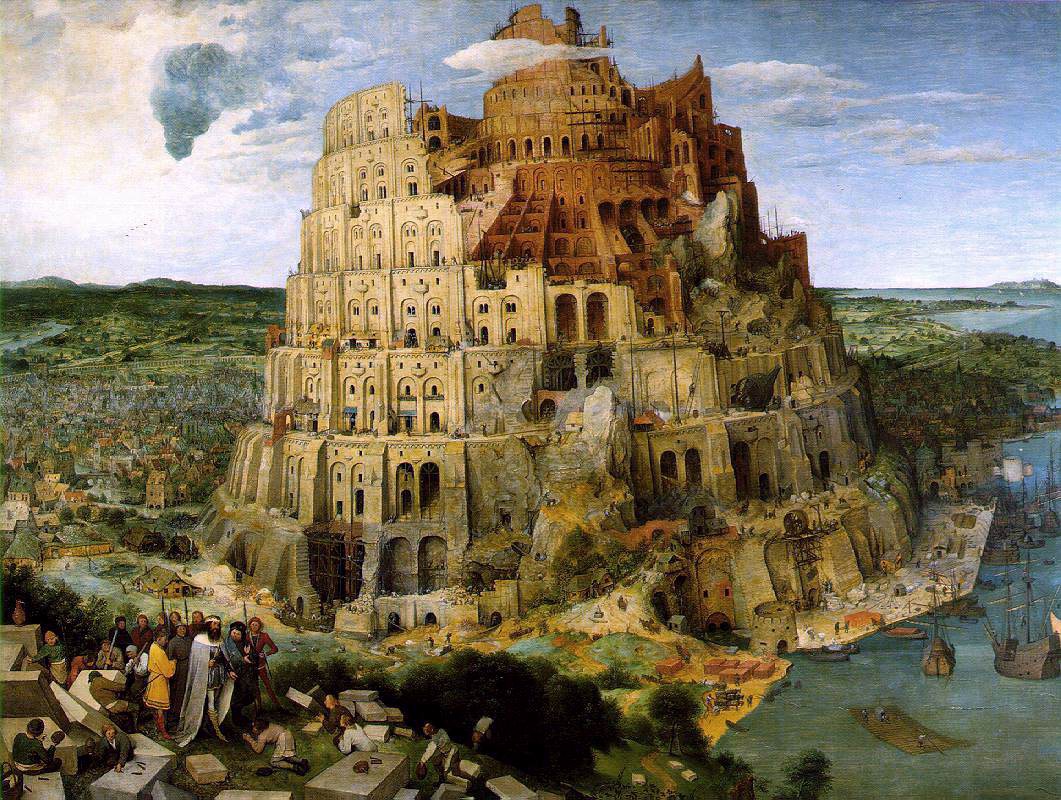
The Tower of Babel, painted by Pieter Bruegel the Elder in 1563, is one of the most iconic and evocative works of Northern Renaissance art.
A schism lies at the foundation of modern linguistics: the insistence that Hebrew, a Semitic language, and Latin, an Indo-European one, sprang from separate, isolated wells. This academic orthodoxy, a veritable Tower of Babel of its own making, renders the profound resonance between the names Noah (נֹחַ) and Noel a mere curiosity, a phonetic coincidence without semantic weight. But what if this divisive framework is the true artifice, a modern reconstruction of that ancient tower? What if the Babel story is not a literal origin but a profound allegory for the fragmentation that this very methodology insists upon? By exploring this, we can dissolve the artificial barrier it erected and recover a deeper truth. The connection between these two names is not one of direct lineage but of a shared archetypal root, a primordial concept that fractured and evolved along different paths, yet retained its essential meaning: the bringer of rebirth after catastrophe.
The Hebrew Noach derives from the root nuach (נוּחַ), meaning “to rest,” “to settle,” or “to come to a place of comfort.” His narrative in Genesis is one of apocalyptic finality and subsequent renewal. He is the righteous remnant, the preserver of life who finds “rest” from the divine judgment of the flood. His name, however, transcends its lexical definition. Noah is not merely a man who rests, he is the architect of the world’s rebirth. The ark is his vessel, the flood waters the amniotic fluid of a new creation, and the dove with an olive branch the herald of a new covenant. His “rest” is the epoch of calm that follows the storm of annihilation. It is the prerequisite state from which all new beginnings must emerge.
Centuries later, from the Latin natalis (“of birth“), emerges Noel. It is the cry of joy celebrating the Nativity, the birth of Jesus Christ. The orthodox etymology insists on a clean separation: natalis shares no root with nuach. But through the lens of Babel, we are licensed to ask a different question: could these concepts be two branches of the same tree? If a unified language contained a root concept for “the catalyst of a new beginning,” would it not logically encompass both the conclusion of trial (rest, settlement) and the commencement of life (birth)?
The semantic shift is both natural and profound:
1. To Rest / To Settle (נוּחַ): This is the culmination of a journey, the arrival at a safe haven. It is the necessary condition for permanence.
2. To Dwell: From settlement comes dwelling, the establishment of a home, a fixed point of origin.
3. Origin / Birth: A dwelling becomes the place of one’s genesis, the hearth from which family and future generations spring.
Therefore, the concept of “birth” can be understood as a direct philosophical and metaphorical extension of “settling into existence.” The phonetic evolution from the guttural Noach to the softer Noel can be theorized as a branching of the original phonemes through the confusion of tongues, where the core sound was preserved but molded to new grammatical forms (e.g., fused with the divine suffix -el) in the daughter languages that would become Latin.
This is not a claim of direct linguistic descent, but a recovery of a unified mytho-linguistic archetype. Noah and Noel are not the same name, but they are two expressions of the same profound human story. One tells of the physical rebirth of all civilization after a flood of water, the other heralds the spiritual rebirth of humanity through a flood of divine grace. One ark is made of wood and the other is a manger.
The Tower of Babel story is more than an etiology of different tongues. It is a parable about the fragmentation of meaning itself. In many ways, our modern disciplines have not studied this fragmentation but have instead completed its construction, erecting their own towers of specialized jargon and isolated frameworks, accepting this divided state as the final word. But by peering through the cracks in this modern edifice, we can recover a glimpse of what was lost. Noah and Noel are not just two words; they are two echoes of a single, primordial concept of “the hope for a new world.” Their persistent resonance in the human psyche is a testament to the enduring power of that original, unified meaning, a timeless reminder that after every ending, without fail, comes a dawn.
Leave a Reply