From The Desk of the Solar Barque
It’s becoming clear to me that a single, pervasive mechanism runs the machinery of our modern culture. It’s more than just a philosophical idea; it’s the primary tool of social, political, and economic control. To understand it, we can map our current reality onto a much older one: what I call the Egyptian “Ra Corporation.”
Imagine the political and financial establishment, the bipartisan “Uniparty“, not as a democratic government, but as the CEO and HR department of a vast corporation. Their corporate policy, their rulebook, is what we call the “Official Narrative,” the bipartisan consensus that defines respectable opinion and the limits of acceptable debate, much like the ancient concept of Ma’at.

Then there’s the soul-processing plant, the Duat. In our world, this is the 24/7 news cycle, the vast propaganda machine and the social media algorithms that feed us an endless, exhausting culture war and a manufactured reality curated from the top down. It’s a churning engine of debate and outrage. And the final judgment, the weighing of the heart? That’s our digital inquisition. The viral outrage demanding purity tests and performative allegiance to one side or the other.
And in every good system, there must be a villain, a system breaker. The Egyptians called it Apep. In our world, Apep is any idea, person, or movement that simply refuses to play the game entirely. It’s the unclassifiable, the non-aligned thought that cannot be co-opted by “Left” or “Right.”
So how does this trap actually work in real time?
First, the system creates a binary. An issue is presented through a lens that forces you to pick a side on their predetermined battlefield. It doesn’t matter what the issue is, the structure is always identical: Black or White, Right or Left, Pro or Anti. You are immediately pressured to choose.
Then, you’re given the illusion of choice. The system offers a “fierce debate” between two sides, but both are products of the same machinery. A vote for “Right” or “Left” is still a vote for the two-party structure. The energy you expend arguing on their terms only powers the very platform that contains you.
And what is being harvested? Your attention, your emotional energy, your life force. Just as the Duat was designed to process souls, our modern media-sphere is designed to process our consciousness into predictable, manageable, and monetizable data points. A divided population, after all, is a controlled population. But the system’s greatest triumph is a population that cannot even imagine the cage. A population that believes the war is somewhere else, fought by someone else, and that the very system harvesting them is what keeps them safe. This is not just control; it is a perfectly managed dream.

The ‘American Dream’ is the spectacular show on the screen, the official narrative. The lady in the shadows is seemingly part of the machinery, yet she is alone, contemplative, and on the verge of realizing she doesn’t have to stay for the feature presentation.
The ultimate goal is to keep you in a perpetual state of reaction, outraged, fearful, or passionately defending one side of the coin, so you never step back to see that the coin itself is the problem.
The modern Apep response, is therefore not a different political party. It is the quiet, natural act of opting out of the dialectic itself. It’s thinking in nuance when the system demands absolute loyalty. It’s holding a position that cannot be easily labeled. It’s refusing to consume the media that feeds the division. It’s recognizing that the “good guy vs. bad guy” narrative is often just a propaganda tool to simplify a complex reality and manufacture our consent.
This mechanism is everywhere; it is the water we swim in. The first step is to see the water for what it is. The second is to realize you don’t have to keep fighting the current. The ultimate goal is not just to escape, but to arrive at a state of clarity, balance, and mental health, a mind that can no longer be divided against itself.
Now, many might think that academia would be the exception to this rule, a sanctuary for free thought. But it is not. It is, perhaps, the sanctuary and refinery of this very binary control mechanism. It is where the function of division is systematized, credentialed, and disseminated as the only legitimate form of knowledge. The academy is the modern world’s House of Life, the temple scriptorium where the rules of the game are written, updated, and enforced.

The Academy’s Underwater Kingdom: Where the scholar is held captive, forced to admire a procession of increasingly convoluted theories. Here, the parade of ideas is so rigid that even when one stumbles, revealing the raw mechanism beneath its ornate costume, the spectacle must continue, unacknowledged. All the while, the simple, unadorned truth remains exiled to the periphery. The true captivity is not in the walls of the kingdom, but in the scholar’s inability to remember that he knows how to swim, and perhaps in the sight of what also swims at her level.
Within its halls, the Binary operates with stunning efficiency.
It begins with the creation of rigid dialectics, the approved binaries. To be “in the field” is to align with one side of a manufactured battle: Structure vs. Agency, Nature vs. Nurture, Postmodernism vs. Realism. These are not just topics; they are battlefields where your academic identity is formed by which trench you occupy.
This is physically manifested in the discipline silos, the literal bureaucracy of divided knowledge. History is separate from Psychology, which is separate from Physics. Each department is a fiefdom with its own high priests, its own dogma, and its own initiation rites. Attempting to work between these silos is often seen as transgressive, a lack of rigor, simply because it doesn’t fit the clean, binary categorization of what knowledge “should” be.
Then comes the peer-review inquisition, the direct equivalent of the weighing of the heart. Your work is judged against the established dogma of the field. Is it sufficiently cited? Does it use the approved methodology? Work that falls outside the binary, that cannot be easily categorized, is often rejected as “unfocused” or “not a contribution.” Its failure to be parsed is its greatest sin.
To succeed, scholars must constantly perform their allegiance, declaring their innocence like a modern-day Book of the Dead. “As a Foucauldian, I…” or “This work sits firmly within the Marxist tradition…” These are not just intellectual positions; they are passwords for gates, magic spells that grant access and legitimacy, signaling that you are a manageable component of the system.
So, what is the Apep approach applied to Academia? It is the same force: the thought that cannot be categorized. It is the multi disciplinary approach that ignores silo walls to create a new, unified language. It is the heretic who points out that the entire structure of a discipline is built on a flawed premise. It is the pursuit of synthesis over analysis, of seeking the patterns that connect instead of the fragments that divide.
The system’s goal is to produce specialized knowledge-workers who will forever debate the nuances of the coin’s two sides, never questioning the metal it’s made of or the hand that flips it. The escape is not to find a better department, but to realize that the academy itself is just one more department in the sprawling, ancient “Ra Corporation”.

“The ultimate American knife… the medium for a conglomerate of statements and illusions.”
— David Bowie
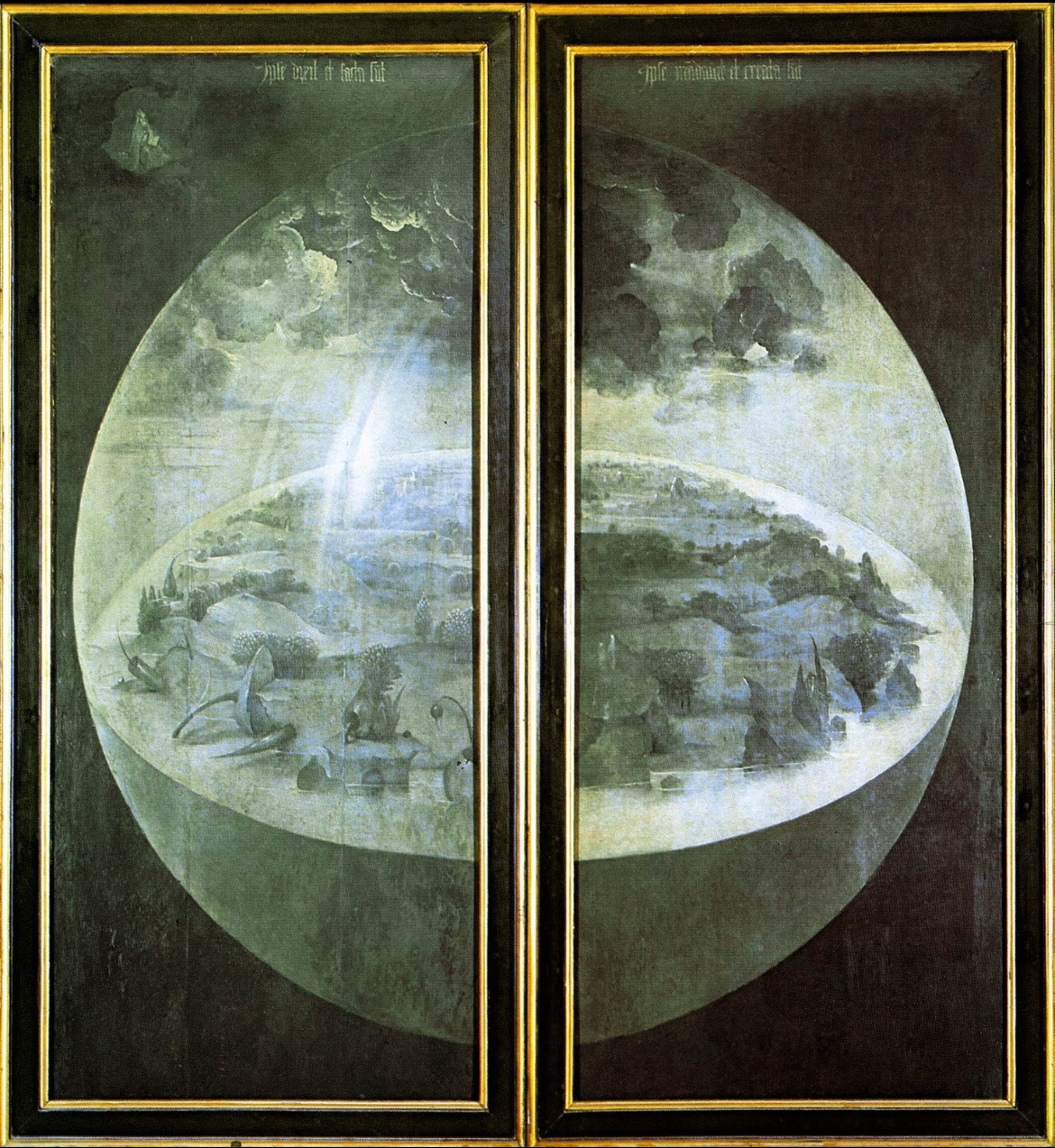
The Garden of Earthly Delights – Closed


Leave a Reply